Once a jacket starts peeling, it becomes sensitive to the same things that caused the damage in the first plac, friction, dryness, and unstable storage conditions. The best prevention routine is not complicated. It’s simply consistent enough to keep the surface flexible, clean, and protected so weak areas don’t turn into new flaking patches.
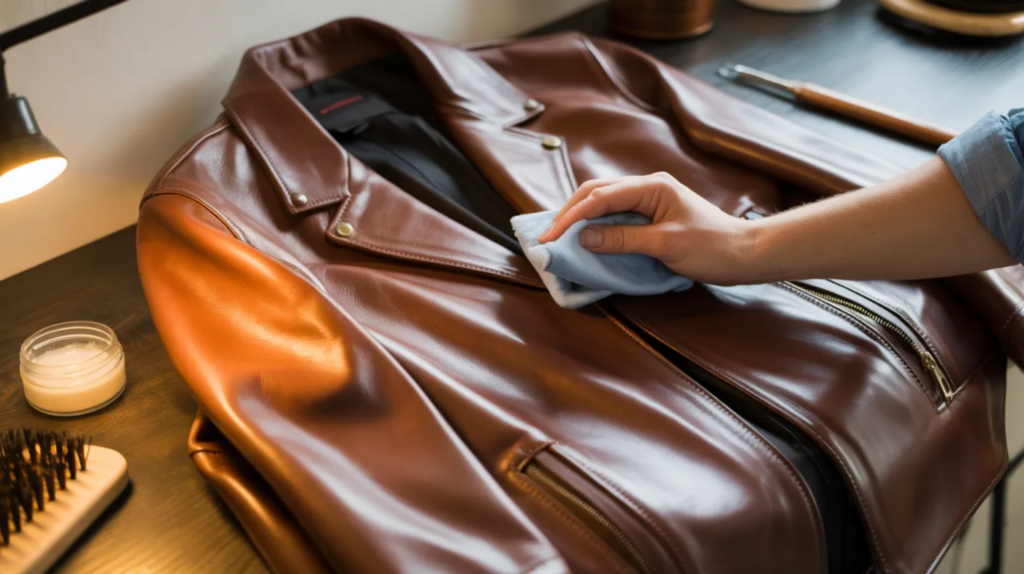
This routine is designed for real life. It works whether your jacket is genuine leather with a worn finish or a coated material that tends to shed when it gets stressed.
What “prevention” really means for a peeling jacket
A peeling surface behaves like a loose edge. When it keeps catching, it lifts more. When it dries out, it becomes brittle. When it goes through heat and humidity swings, the finish loses stability.
So prevention has three goals:
- Reduce abrasion (so the edge doesn’t get pulled)
- Maintain flexibility (so the surface doesn’t crack and lift)
- Keep conditions stable (so layers don’t separate faster)
If you already saw how a jacket can start peeling when exposed to heat or humidity fluctuations, the routine below is built to remove that pattern from your daily life.
Daily routine (2 minutes)
1) Quick visual check before you leave
Peeling spreads fastest when a loose edge catches on clothing or a strap. A 10-second check helps you spot the “catch points” early.
Look at:
- Elbows
- Cuffs
- Collar edges
- Shoulder areas where bags rub
If you see a raised edge, treat that area gently for the day. Even small changes, like switching the shoulder a bag sits on, can prevent a small peel from turning into a wide patch.
2) Dust-lift instead of rubbing
Dust and grit create friction. The best daily habit is a light dust-lift with a soft microfiber cloth.
Keep it simple:
- Light strokes
- No hard pressure
- No polishing motion
This protects the surface because you’re removing abrasion rather than grinding it into the finish.
3) Avoid the three “finish killers” during wear
These are the most common repeat triggers:
- Heat sources: heaters, direct sunlight through a window, leaving it in a hot car
- High friction: backpack straps, tight seat edges, rough tables
- Wet exposure: rain soak, steamy rooms, damp closets
You don’t need to be anxious about life. You just need to avoid repeating the exact stress that makes peeling grow.
Weekly routine (10-15 minutes)
1) Gentle wipe (only when needed)
If your jacket looks clean, skip this. Over-cleaning is surprisingly damaging.
If it needs it:
- Use a slightly damp cloth (water only)
- Wipe once, then stop
- Let it air dry naturally away from heat
The goal is to remove grime that acts like sandpaper, not to “scrub it back to new.”
2) Condition lightly when the surface feels tight
Conditioning helps when leather is dry and losing flexibility. But over-conditioning can create a sticky surface that attracts dust and increases rubbing.
A smart weekly approach is “light and spaced”:
- Apply a thin amount
- Use gentle strokes
- Stop when the surface feels normal again
If you’re unsure whether your jacket needs softening or a more protective surface approach, it helps to understand how the surface behaves when you choose conditioning versus protective coating.
3) Pay attention to the high-stress zones
Most peeling starts in the same places because those areas bend and rub the most.
Give extra care to:
- Elbows (constant flex)
- Cuffs (constant contact)
- Collar (skin oils + rubbing)
- Shoulders (bags + straps)
This is also where prevention works best because small improvements here stop the chain reaction early.
Monthly routine (the “surface reset” without overdoing it)
1) Clean + protect, but keep it light
Once a month is a good time to do a slightly more intentional session:
- Gentle wipe to remove buildup
- Light conditioning if needed
- Surface protection only if your jacket type benefits from it
If the jacket is actively shedding, don’t jump to heavy products. It’s better to stabilize first using the calm first-day approach you used earlier, especially if the surface has recently started flaking.
2) Check storage conditions even if you’re still wearing it
A jacket can peel faster simply because it rests in a bad environment between wears.
Make sure it’s not:
- pressed tight between other clothes
- sitting under direct sunlight
- hanging near a heater or kitchen warmth
- trapped in a plastic cover
Even small upgrades like spacing it out and improving airflow can prevent new peeling.
The storage routine that prevents “surprise peeling” later
Many jackets start peeling again after a season change because storage quietly damaged the surface.
For short-term storage (a few days):
- Wide hanger
- Breathable space
- Away from heat
For seasonal storage:
- Keep it shaped (no tight folds)
- Use breathable coverage
- Avoid damp areas and heater-dry rooms
This matters most in winter and during weather shifts, because the surface gets stressed when conditions change, which is why proper seasonal care prevents flaking during storage and transitions.
A simple “don’t do” list that prevents most peeling
- Don’t scrub peeling areas
- Don’t use alcohol wipes or harsh cleaners
- Also, don’t dry leather near heat sources
- Don’t over-condition until the surface feels greasy
- Don’t store it in plastic or cramped spaces
- Also, don’t let straps rub the same spot every day
These aren’t rules to make life hard. They’re just the common triggers that keep peeling alive.
What results to expect (so you don’t feel discouraged)
A prevention routine doesn’t always make peeling disappear immediately. What it does is slow the spread and reduce how often new flakes appear.
Usually you’ll notice:
- fewer new peeling spots
- less “edge lifting”
- a calmer surface that doesn’t shed as easily
- better resilience during wear and storage
That’s the real win: the jacket stops getting worse at the same speed, and you regain control.