It’s frustrating when a jacket looks “fine” at the end of a season, then comes out of storage peeling more than before. That usually happens because storage isn’t neutral. Storage can dry the surface, trap moisture, or press the finish against rough fabric long enough that weak areas start lifting.
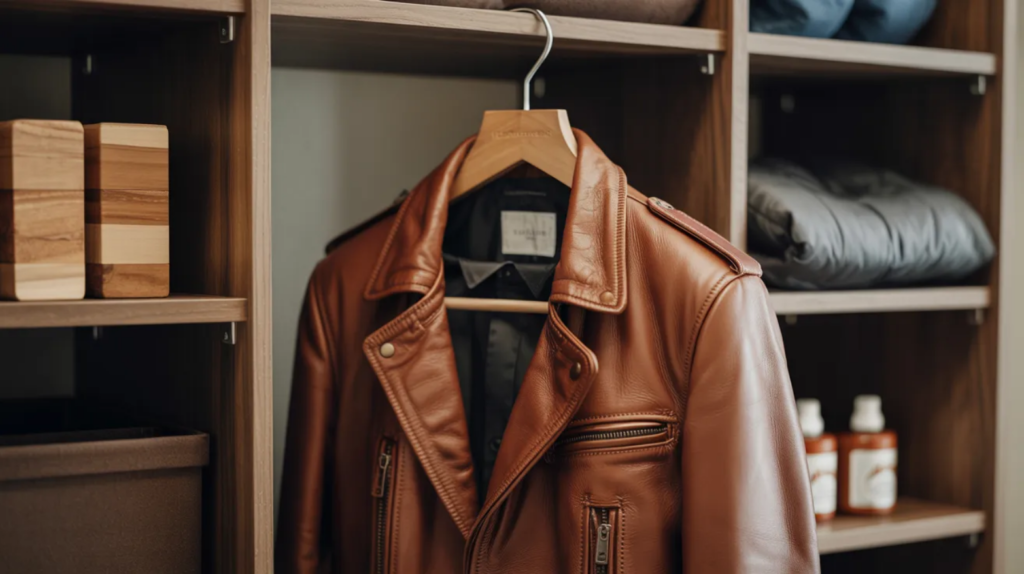
This page shows how to store a leather jacket through winter and seasonal shifts so the surface stays stable, flexible, and less likely to flake when you wear it again.
Why storage causes peeling even when the jacket isn’t being worn
A jacket doesn’t need daily friction to deteriorate. It only needs stress.
Storage creates stress in three common ways:
- Air becomes too dry, pulling flexibility out of the surface
- Air becomes too damp, softening the finish and weakening it
- The jacket is pressed, folded, or rubbed against other clothes, creating slow abrasion
When the season changes, temperature and moisture levels change too, and those swings can push a fragile finish over the edge.
If you’ve been trying to stop leather jacket peeling and prevent further flaking, storage is one of the easiest places to protect your progress because it’s fully controllable.
The biggest winter risks (and why they cause flaking)
1) Heater-dry air makes the surface brittle
Winter indoor air is often dry, especially when heaters run daily. Dry air pulls moisture from leather, and less moisture usually means less flexibility. A less flexible surface cracks more easily at bends, and cracks often become the starting line for peeling.
2) Tight closets create constant rubbing
A crowded wardrobe turns the jacket into a rubbing surface. The shoulders scrape, sleeves press against zippers and buttons, and the finish wears down even without movement.
3) Plastic covers trap moisture
Plastic doesn’t breathe. Moisture builds up, the finish can soften slightly, and that softened surface becomes easier to lift later. Even worse, trapped moisture encourages mildew smells that lead people to over-clean the jacket, which can strip the finish further.
The simple storage setup that prevents most peeling
Step 1: Use the right hanger
A jacket holds its shape best on a wide, supportive hanger. Narrow hangers create shoulder pressure points, and pressure points can become peeling points.
Step 2: Give it breathing space
Don’t pack it between thick coats. Space reduces friction and prevents slow abrasion.
Step 3: Choose a breathable cover (or none)
If you need a cover, use something breathable. The goal is airflow, not sealing.
Step 4: Store it in a stable area
Avoid:
- near heaters and radiators
- near kitchens and steam
- near windows with direct sun
- basements with damp air
- top shelves in rooms that heat up
The “best” spot is boring: cool, dry, dark, and well-ventilated.
Seasonal transitions: the moment most jackets lose stability
A jacket often peels more during transitions than during the season itself.
Common transition stress:
- cold outdoor air → warm indoor heating
- humid rainy days → dry air-conditioned rooms
- warm storage rooms → cooler nights
Those shifts force the finish to expand and contract, and repeated stress weakens the surface bond. That’s why the climate pattern behind peeling matters, especially when heat and humidity changes trigger finish breakdown.
A simple transition habit that helps
When the weather changes sharply, avoid heavy wear on day one. Let the jacket acclimate indoors on a hanger for a little while before you put it through flex-heavy movement.
Pre-storage routine (10 minutes)
You don’t need a deep treatment before storage. You need a clean, calm surface.
1) Remove dust gently
Dust becomes abrasion later. A light microfiber wipe is enough.
2) Keep cleaning minimal
If it isn’t dirty, don’t wash it “just because.” Over-cleaning often strips the finish.
3) Add light conditioning only if it feels dry
Dryness going into winter storage is like sending the jacket into a dry desert without water. A thin conditioning layer helps it stay flexible.
The key word is thin. Heavy product can attract dust and create stickiness over time. A steady rhythm of light care works better than one big session, which is why a weekly prevention routine usually keeps jackets more stable across seasons.
During storage: quick checks that prevent “surprise peeling”
Even when stored properly, a simple check prevents small issues from growing:
Every 3-4 weeks (30 seconds)
- Confirm it’s still hanging freely
- Confirm the closet doesn’t feel damp
- Confirm nothing is pressing against sleeves or shoulders
If the closet feels humid, improve airflow. If it feels extremely dry, keep it away from heaters and hot air flow.
Taking it out of storage: how to avoid triggering flaking
The first wear after storage is when many jackets peel more, because the surface has been resting and then suddenly gets flexed.
1) Let it settle on a hanger first
Give it time to adjust to room temperature and humidity before bending elbows and cuffs hard.
2) Dust-lift before you wear it
Any built-up dust becomes friction once you move.
3) If it feels stiff, keep movement gentle at first
Stiffness means the surface needs flexibility again. Gentle use prevents cracks from forming at bends.
What success looks like
Good storage doesn’t always make a jacket look “new.” It simply prevents deterioration while the jacket rests.
You’ll know it worked when:
- the surface doesn’t feel brittle when you take it out
- elbows and cuffs don’t suddenly shed more flakes
- the jacket looks stable after the first few wears
- peeling doesn’t appear in new random areas
That’s the real win: storage stops being the place where damage silently grows.