A leather jacket can look perfectly fine for months, then suddenly start cracking, dulling, or peeling in the places you touch most. When that happens after warm weather, storage near heat, or frequent sun exposure, the cause is often simple: heat and UV slowly change the finish until it can’t flex and hold together anymore.
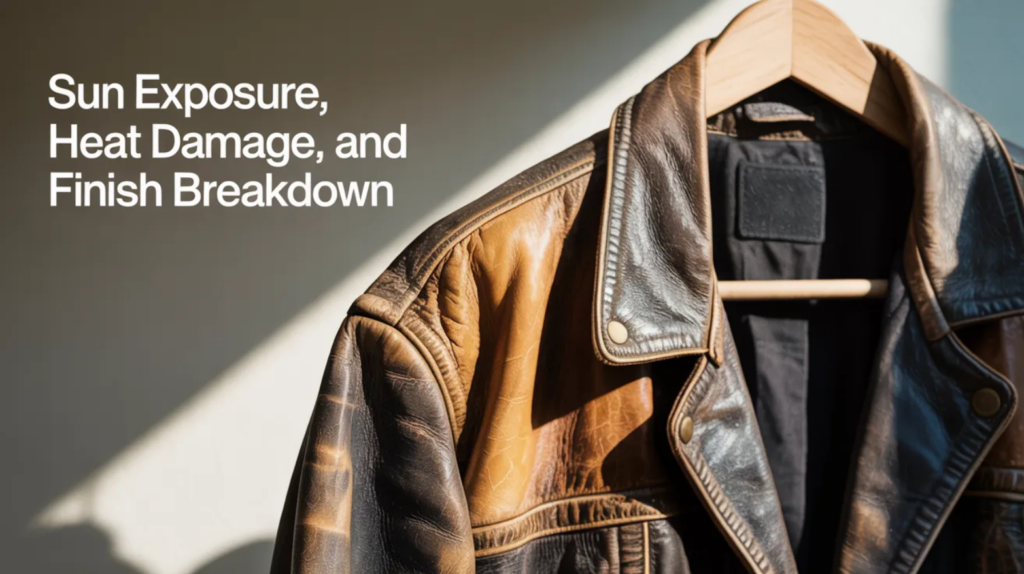
This isn’t always dramatic damage. It’s usually a quiet breakdown that happens in stages. Once you recognize the stages early, you can prevent peeling long before the jacket reaches the “lifting film” phase.
What heat and sun actually do to a jacket finish
A leather jacket surface is not just “leather.” Most jackets have a finish system on top of the leather (or on top of a synthetic base) that controls color, feel, and protection. That surface system includes layers like color and protective clear coats, which is why knowing the finish layers on a leather jacket helps you understand why heat and UV tend to attack the outermost part first.
Heat and sun create three stresses at the same time:
- Drying stress: warmth pulls moisture out of the surface and makes it less flexible.
- Expansion stress: warm/cool cycles make layers expand and contract slightly.
- UV stress: sunlight weakens materials over time and can accelerate fading and brittleness.
When those stresses repeat, the finish loses elasticity. Once the finish can’t move, it cracks. Once it cracks, it can lift. Once it lifts, peeling spreads with normal wear.
The early warning signs most people miss
Heat and sun damage rarely starts with peeling. It starts with subtle changes that feel easy to ignore.
Look for these early signals:
- the jacket looks a little duller in one panel compared to the rest
- color starts to look slightly washed on shoulder tops or upper sleeves
- the surface feels less buttery and more “dry-glassy”
- tiny crease lines look sharper and more “etched” than before
- the jacket feels stiff when you bend a warm, sun-exposed area
Those changes are the finish telling you it’s losing flexibility. If you notice them early, you can slow the process dramatically.
The stages of heat and sun finish breakdown
Instead of thinking “it peeled,” think “it progressed.” Heat-related finish failure usually follows a predictable pathway.
Stage 1: Dulling and uneven sheen
The first stage is often cosmetic. The surface loses its even glow. A satin jacket may look patchy, or a glossy jacket may look uneven. This happens because the protective film starts changing at the surface.
At this stage, the jacket may not look damaged, just “a bit tired.”
Stage 2: Dry feel and micro-roughness
Next, the surface starts feeling slightly rough or dry, especially in areas exposed to sunlight like shoulder tops, collar edges, and upper sleeves.
This is where many people try heavy conditioners. Sometimes that helps the feel, but if the issue is the finish film becoming unstable, the real problem still sits in the coating.
Stage 3: Fine cracking at bend lines
Once flexibility drops, fine cracking appears where the jacket bends. You’ll see:
- faint crack lines at elbows
- crease lines that look sharper and lighter
- tiny “crazing” patterns on glossy finishes
At this stage, movement is starting to break the finish mechanically. The jacket bends, the film resists, and the stress becomes visible.
Stage 4: Flaking or “dusty shedding”
When cracks deepen, small flakes start coming off. The flakes can be clear, slightly tinted, or color-carrying depending on which layer is failing.
This stage often gets mistaken for “dry leather,” but it’s usually a brittle surface film giving up.
Stage 5: Lifting edges and peeling (the runaway stage)
Once a small edge lifts, the peeling can spread faster. The jacket flexes daily, and that lifted edge catches friction.
If the peeling looks like a thin film lifting, it often overlaps with the behavior of clear-coat lifting. If it lifts near repaired spots or treated zones, it can also involve bond weakening between layers.
Where sun and heat damage shows up first (and why)
Sun and heat don’t attack evenly. They hit the most exposed, most stressed zones first.
Shoulder tops and upper sleeves
These panels catch sunlight directly during wear. They also warm up faster and cool down faster, which increases expansion stress.
Collar edges and neckline
Collars sit in sun, absorb sweat, and experience constant bending. That combination accelerates breakdown.
Forearms and cuffs
These areas get both sun exposure and abrasion from everyday contact, so finish breakdown can accelerate there.
Any panel near a heat source during storage
Jackets stored near heaters, warm walls, boilers, or hot closets often show damage in the panel closest to the heat source, sometimes in a strangely “one-sided” pattern.
Why some jackets peel faster than others in the same heat
Two people can treat their jackets similarly and get different outcomes. That’s because jackets vary in surface construction.
- A jacket with a heavier pigment + clear finish may develop film brittleness faster.
- A jacket with a more natural finish may fade more than peel.
- A PU or coated synthetic jacket can behave like a layered composite, where heat accelerates separation in a way that looks like delamination rather than simple flaking.
That’s why heat is a “multiplier.” It doesn’t create one single failure, it accelerates whichever failure your surface system is already prone to.
Prevention: what actually reduces heat/sun peeling risk
You don’t need perfection. You need consistency in a few simple habits that reduce stress.
1) Don’t store it near heat, even if it’s “not that close”
If a jacket is stored where the air is warmer, near a heater, hot closet ceiling, or sun-facing window, the finish ages faster than you’d expect.
A cooler, shaded, breathable space helps the finish stay flexible longer.
2) Avoid hot-car storage
A car interior can become an oven. Even short repeated exposure can create the expansion stress that weakens finishes. If you have to carry the jacket, keep it out of direct sun inside the car and avoid leaving it for long periods.
3) Let it air out after wear
Sweat and humidity build up in collars and underarms. Airing the jacket in a shaded place reduces moisture cycling, which helps the finish remain stable.
4) Don’t overdry the surface with aggressive cleaning
If a jacket has been in heat and sun, its finish is already vulnerable. Harsh cleaners can push it into cracking and lifting faster. Gentle cleaning preserves what’s left of the finish rather than stripping it further.
5) Reduce friction in sun-exposed zones
Heat + friction is a powerful combination. If you always wear a backpack or seat belt over the same area, that area is already stressed. Rotating straps or being mindful of rubbing slows the “dulling → cracking → peeling” chain.
If you suspect heat damage, what should you do first?
If you suspect the jacket is in stage 1-3 (dull, dry, fine cracks), the best move is to pause anything aggressive. Don’t scrub it. Don’t pick at micro-cracks. Don’t try to “seal” it with random products.
Instead, confirm what kind of peeling risk you’re dealing with:
- If you see film-like lifting starting, that matches topcoat separation behavior.
- If the jacket looks like two materials separating, check delamination vs surface flaking.
- If peeling is starting near treated spots or repairs, the pattern often follows bond weakening at the layer boundary.
Once you know the mechanism, you can choose prevention and repair steps that match the reality of your jacket.
Conclusion
Sun exposure and heat damage break leather jacket finishes in stages. The surface usually dulls first, then dries, then develops fine cracks at bend lines, then starts flaking, and finally begins peeling once an edge lifts. This happens because heat and UV reduce finish flexibility and stress the bond between surface layers.
If you catch the early stages, you can slow the damage with cooler storage, less sun exposure, gentle cleaning, and better airflow after wear. And when peeling starts to appear, recognizing whether it’s clear-coat lifting, bond weakening, or delamination helps you prevent the same cycle from repeating across the jacket.