A leather jacket can look “ruined” the moment the surface starts flaking, lifting, or shedding color. In many cases, you’re not repairing the leather itself, you’re repairing a finish system: the clear topcoat, the color layer, and the material underneath. That’s why the same “peeling” look can come from totally different causes, and why one jacket responds beautifully to restoration while another keeps shedding no matter what you apply.
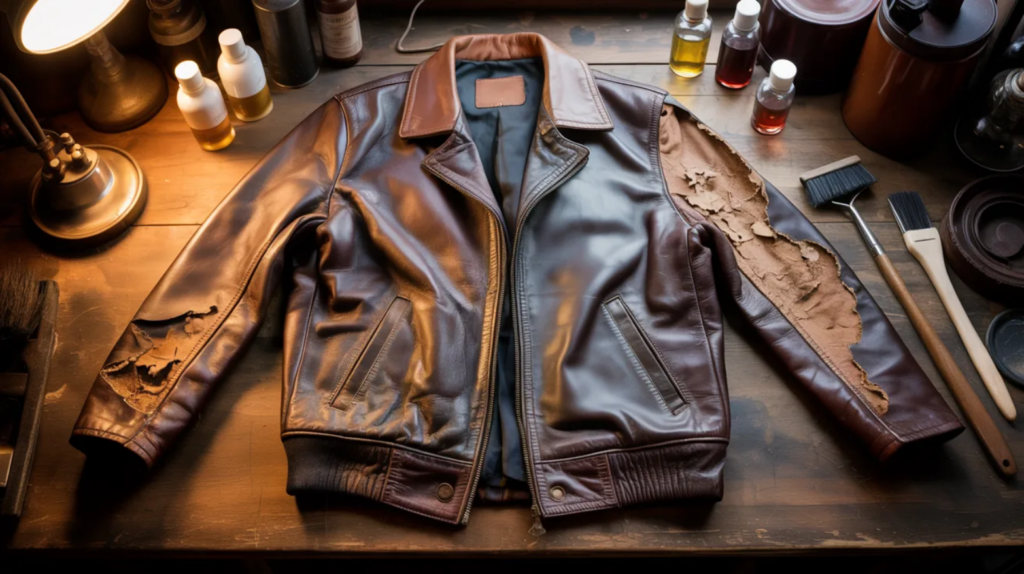
This hub helps you identify what your jacket is made of (real leather, aniline, faux leather, or bonded leather) and what peeling means for each type. Once you know the material, you can choose repairs that are safe, realistic, and worth your time.
Why the material type matters more than the peeling look
“Peeling” is a symptom, not a diagnosis. Faux leather peels when a plastic film separates from its fabric backing. Bonded leather peels because a composite layer breaks down and releases flakes. Real leather rarely peels in sheets, but it can lose pigment, shed topcoat, or crack from dryness until it looks like peeling.
That difference changes everything. A conditioner can soften real leather, but it cannot reattach a plastic film. A recoloring product can blend worn pigment, but it won’t rebuild a bonded composite that’s crumbling. When you match the repair to the material, you stop guessing, and you stop repeating the same disappointing results.
If you’re not sure what you own, you can identify your jacket material at home using simple tests and visual clues before you buy any products.
Quick diagnosis: flakes, sheets, cracks, or color rub-off?
Before you do anything, look closely at what’s coming off and how it behaves:
- Peeling in thin sheets (you can lift an edge like a sticker) usually points to faux leather or bonded leather.
- Cracking lines with tiny flakes often points to faux leather, because the plastic surface gets brittle and fractures.
- Color rubbing off on elbows, cuffs, and edges often points to finished/pigmented real leather, where the top color coat is wearing away.
- Patchy fading that looks “washed out” rather than lifted can point to aniline or semi-aniline leather, where the surface is more open and sensitive.
Once you match the symptom, you can narrow down the material type fast.
Real leather: what peeling usually means
Most real leather jackets don’t peel like paint. When people call it peeling, it’s usually one of these:
- Finish wear: the protective topcoat thins, chips, or rubs away on high-friction areas.
- Dry cracking: the leather fibers lose flexibility, so creases deepen, split, and start shedding tiny fragments.
The key sign is what’s underneath. If the base feels like a continuous hide and the damage is mainly on the surface, you’re often dealing with finish wear. If the leather itself feels stiff and the cracks look deeper with flexing, dryness is probably driving the damage.
If you’re trying to decide whether your jacket has a protective finish or is more open and absorbent, you can learn how finished leather and naked leather behave differently when they age.
What tends to work on real leather finish wear
A real leather jacket can recover because the foundation is still strong. In most cases, the best approach is layered:
- Clean gently so grime doesn’t block new finish from bonding.
- Restore flexibility so stress points don’t crack further.
- Recolor where needed if pigment loss is visible.
- Reseal so friction and moisture stop attacking the surface.
When done patiently, the jacket often stops looking “damaged” and starts looking “lived-in” again, which is usually what people want.
Aniline leather: why it can look like peeling even when it isn’t
Aniline leather is dyed through and usually has little to no heavy pigment layer on top. Because the surface is more natural and open, it reacts quickly to sunlight, sweat, body oils, and friction. Instead of a plastic-like peel, what you often see is dye loss, abrasion, and dryness happening together.
That’s why aggressive cleaning backfires on aniline. Scrubbing doesn’t just remove dirt, it can remove color and leave the surface uneven. When people panic and “try harder,” they often speed up the fading.
If your jacket seems absorbent, soft, and easily marked, it may help to understand why aniline dye can wear away in patches and how safe restoration works before you apply strong cleaners or thick fillers.
What tends to work best on aniline-type wear
- Very gentle cleaning that doesn’t strip dye
- Light, controlled conditioning to reduce brittleness
- Careful color blending when damage is localized
Aniline repairs are rarely about making the jacket “perfect.” They’re about bringing it back to a calmer, more even appearance, without creating dark stains or shiny patches.
Faux leather: peeling vs cracking (and what’s realistic)
Faux leather is typically fabric + a plastic surface layer (often PU, sometimes PVC). As it ages, the surface loses flexibility. First it cracks, then those cracks spread, and eventually pieces lift and peel away.
This is important: faux leather peeling is usually structural separation, not surface dryness. That means leather conditioners won’t fix the core issue. They may make the surface look better for a short time, but they cannot reconnect the film to the backing.
If you’re not sure whether you’re dealing with cracking or true peeling, it helps to see how faux leather can peel in sheets or crack in lines depending on how it breaks down.
What’s realistic on faux leather
- Small-area patching for appearance
- Edge stabilization so lifted spots don’t catch and tear
- Accepting a “temporary improvement” goal if the damage is widespread
Faux leather can feel heartbreaking because it often looks great right before it starts failing. But once it begins peeling across big areas, the most honest repair goal is usually “make it wearable and presentable,” not “restore it permanently.”
Bonded leather: why it splits and peels (and why it accelerates)
Bonded leather is made from shredded leather fibers mixed with binders, then coated with a surface layer to mimic a hide. It can look convincing when new, but it behaves like a composite. As the binder and surface layer age, the material can start shedding flakes, peeling, and even splitting at flex points.
The key limitation is that bonded leather cannot be nourished the same way a real hide can. The failure isn’t just “dryness.” It’s a breakdown in the composite structure, and once that starts, it often spreads.
If the surface is flaking widely and seems to be coming from a thin top layer, that’s often why a jacket can start peeling when the bonded structure begins breaking apart over time.
What’s realistic on bonded leather
- Cosmetic patching for small areas
- Cover-based fixes when you need it to look decent for occasional wear
- Replacement when peeling spreads across multiple panels
Bonded leather often feels like a “surprise disappointment,” because buyers expect it to behave like real leather. Once you recognize it, you can stop chasing permanent fixes that aren’t possible.
Conclusion
Leather jacket peeling looks similar across many jackets, but the cause depends on material construction. Real leather usually fails through finish wear or dryness. Aniline leather often shows dye loss and abrasion. Faux leather fails through plastic cracking and film separation. Bonded leather fails through composite breakdown.
When you identify the material first, your repair choices become calm and clear. You stop wasting effort on products that can’t bond to the surface, and you start using methods that actually fit what your jacket is made of.