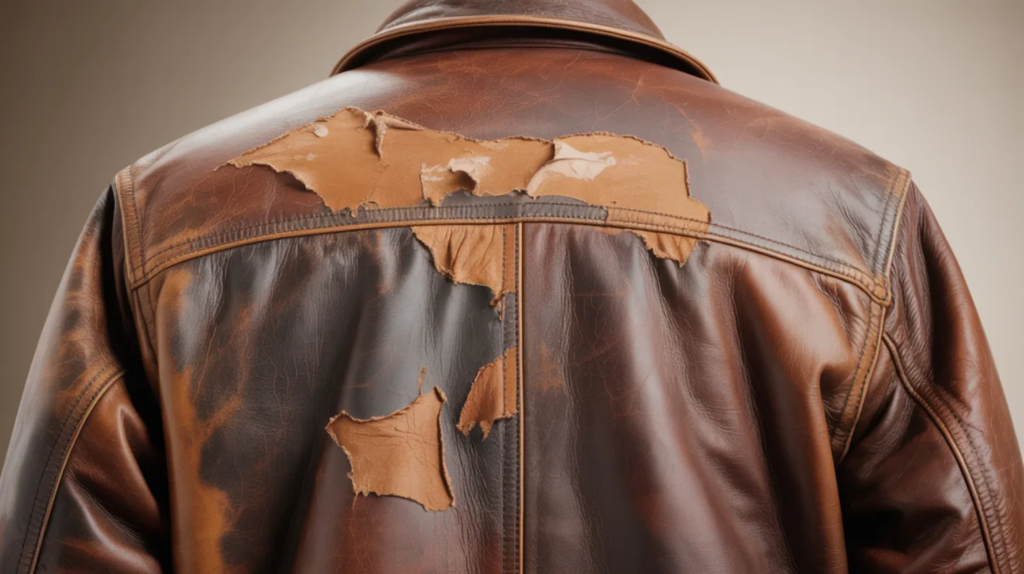
An aniline leather jacket can look heartbreakingly “worn out” fast, especially when the color starts fading in patches, the surface looks dusty, or tiny flakes appear around high-contact areas. The frustrating part is that aniline damage often gets called “peeling,” even when nothing is actually lifting like a film. In most cases, what you’re seeing is dye loss + surface abrasion + dryness working together, and the safest repair is the one that respects how aniline leather is built.
If you’re still confirming what your jacket is made of, it helps to start from the material-type hub so you don’t treat aniline like faux or bonded leather. That’s why peeling by material type is the best starting point when you’re unsure.
What “aniline peeling” usually is (and what it usually isn’t)
Aniline leather is dyed through, and its surface is more natural and open than heavily finished leather. Because of that, it shows wear honestly. When the jacket ages, it can look like it’s peeling, but the real story is usually one of these:
- Color wearing away from friction (cuffs, elbows, collar edges, pocket openings)
- Dry fibers breaking down so the surface looks chalky or dusty
- Old residue or harsh-cleaner damage leaving uneven, fragile areas that shed
- Abrasion that scuffs the grain and makes it look “flaky” when light hits it
What it usually is not: a plastic layer lifting in sheets. If you can lift the surface like a sticker, that’s far more typical of faux or bonded leather, not aniline.
Why aniline dye wears away faster than people expect
Aniline leather feels soft and premium because it isn’t sealed under a heavy pigment coat. That softness comes with a tradeoff: the surface has less protection from daily life.
Here are the most common causes:
1) Friction slowly removes color
Every time the jacket rubs against your skin, a bag strap, a seat belt, or a desk edge, it creates micro-abrasion. Over months, those tiny scuffs add up until the color looks thinner and uneven.
2) Sweat and skin oils change the surface over time
Body oils don’t just “sit” on aniline, they can soak in, darken areas, attract dust, and create sticky patches that collect grime. Then cleaning becomes harder, and people scrub more, which speeds up wear.
3) Sunlight fades open-dyed surfaces
UV exposure is harsh on dyes. Aniline can fade in a way that looks patchy, especially if one shoulder or sleeve sees more sun than the other.
4) Over-cleaning strips what little protection exists
Harsh cleaners, alcohol wipes, strong soaps, and aggressive brushing can pull dye and dry the surface. The result is often that dusty “flaking” look that feels like peeling.
The biggest mistake: treating aniline like finished leather
Finished (pigmented) leather often tolerates stronger cleaning and more “surface-level” repair because the finish system is built for it. Aniline is different, because the surface is more sensitive and more absorbent.
If you want to compare your jacket’s behavior to a more sealed leather type, it helps to see how finished leather and naked leather differ in how they peel and wear. That contrast makes it much easier to choose a repair that doesn’t leave shiny patches or dark stains.
How to confirm you’re dealing with aniline (quick, safe signs)
You don’t need lab tests, but you do need a careful eye. Aniline leather often shows these clues:
- The surface feels warm and natural, not plasticky or heavily coated
- Light scuffs and marks appear easily, then blend back with gentle rubbing
- Color wear looks like fading and abrasion, not film lifting
- The jacket seems more “alive” in texture, poised between soft and delicate
If you want a step-by-step way to check without damaging the jacket, you can identify your jacket type at home using simple tests and visual clues before you try any product.
What repairs work safely on aniline (the realistic approach)
Aniline repairs should aim for stability and evenness, not perfection. The safest plan usually follows this order:
Step 1: Gentle cleaning (remove what’s causing ongoing damage)
Start with the mildest method that actually removes grime. The goal is to lift surface dirt and salts without pulling more dye.
What “gentle” means in practice:
- Use light pressure
- Work slowly in small sections
- Avoid soaking the leather
- Don’t scrub as if you’re cleaning plastic
If color comes off heavily during cleaning, that’s a sign the surface is already fragile, and you should stop and switch to an even gentler approach.
Step 2: Controlled rehydration (restore flexibility, reduce brittle flaking)
When aniline dries out, it becomes more prone to micro-cracking and dusty shedding. A light conditioner can help the fibers flex instead of breaking.
The key is moderation:
- Too much product can darken aniline unevenly
- Heavy oils can create blotches that never fully blend
- Multiple light applications beat one heavy coat
Step 3: Color restoration (only after the surface is stable)
If dye loss is obvious, color restoration can make the jacket look calm again. The safest results come from:
- Matching color carefully
- Building color gradually
- Blending edges so repairs don’t look like painted islands
The purpose is usually to reduce contrast, so worn areas don’t “shout”, rather than to create a flawless showroom finish.
Step 4: Light protection (reduce repeat wear)
Because aniline is open, it benefits from a protective routine that reduces friction and dirt buildup. The jacket doesn’t need to feel coated, but it does need support against the same forces that caused the damage.
What to avoid (the “sounds good, goes wrong” list)
Aniline leather punishes shortcuts. These are the most common repair moves that cause regret:
- Alcohol wipes or solvent cleaners (they can strip dye fast)
- Aggressive scrubbing or stiff brushes (they increase abrasion)
- Thick fillers and heavy “leather paint” layers (they can crack later and look unnatural)
- Over-conditioning (blotchy dark patches are hard to reverse)
- Heat-based drying (it accelerates dryness and fiber stress)
If your goal is a repair that looks natural and feels like leather, patience is part of the process.
When aniline “peeling” is actually something else
Sometimes an aniline jacket has been treated by a previous owner, or it’s semi-aniline with a light finish. In those cases, the surface may behave more like a delicate coating than a purely open dye surface.
A simple way to decide is this:
- If you see fading + scuffing + dryness, think aniline-style wear.
- If you see chips of color and a more sealed feel, you may be dealing with a light finish system, closer to finished leather behavior.
That’s exactly why the broader hub on leather jacket peeling by material type is useful, because it keeps you from forcing an aniline repair plan onto a jacket that’s actually sealed, or vice versa.
Conclusion
Aniline “dye peeling” is usually not a film peeling off the leather. It’s most often a combination of dye wear, surface abrasion, and dryness that makes the jacket look patchy, dusty, or flaky. The safest repairs focus on gentle cleaning, controlled conditioning, gradual color blending, and light protection, so the leather stays flexible and the color looks even again.
When you treat aniline like the sensitive, open leather it is, the jacket doesn’t just look better, it stays better, because you’re working with the material instead of fighting it.