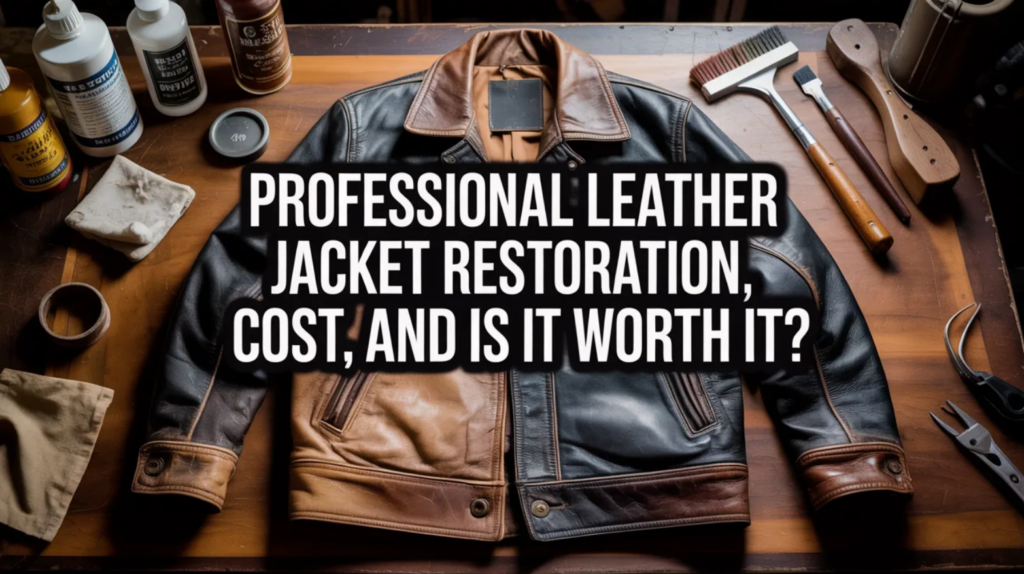
Professional leather jacket restoration is a paid service that rebuilds the look and wearability of a jacket through cleaning, conditioning, repairs, recoloring, and refinishing. It matters because many jackets don’t “wear out” all at once, they lose comfort, develop scuffs, fade unevenly, or show peeling on the surface finish, and a specialist can often restore those issues enough to make the jacket worth wearing again.
What “professional restoration” really means
A restoration specialist usually treats your jacket like a project with stages, not like a quick polish job. The surface is assessed first, then the leather is stabilized, then appearance is rebuilt, and only after that is the finish sealed so it can handle everyday movement.
Most professional restoration work can include:
- Deep cleaning to remove body oils, smoke smell, dirt build-up, and old product residue
- Conditioning to improve flexibility and reduce dryness
- Stitch repairs for loose seams, worn cuffs, torn edges, or stress points near pockets
- Color work to blend scuffs, correct faded patches, or restore an even tone
- Refinishing to improve the sheen and add a protective top layer
This is also why two jackets that “look similar” in photos can get very different quotes. One may only need conditioning and a light color blend, while the other needs surface rebuilding.
Why peeling changes the entire price and outcome
Peeling is rarely “just cosmetic.” In many jackets, peeling happens because the top coating breaks down, separates, or flakes after years of friction, heat exposure, storage issues, or harsh cleaning. Once that surface becomes unstable, anything applied on top of it has a harder job sticking long-term.
That is why a leather jacket can cost significantly more to restore when the finish is peeling rather than simply faded, because the repair often involves stabilizing the surface before it can be recolored and sealed again.
Professional leather jacket restoration cost: what you’ll pay and why
Most quotes make sense when you realize you’re paying for two things: skilled labor and careful surface preparation. Color work also raises the price because matching leather tones is more time-consuming than people expect.
Costs usually fall into a few common “service buckets”:
- Clean + condition (best for dryness, dullness, odor, general wear)
- Scuff and color blending (best for visible rub marks and uneven areas)
- Full recolor / re-dye (best for widespread fading or major tone imbalance)
- Peeling finish repair (best for flaking, surface breakdown, patchy coating)
- Structural repairs (zips, linings, cuffs, seams, hardware)
If you want to understand how shops calculate pricing and why peeling repairs often sit at the higher end, the details matter in how the job is staged. That’s exactly what you’ll see when you read about what you’re paying for in professional restoration cost pricing.
Is it worth repairing a peeling expensive leather jacket?
This is usually where people get emotionally torn. A jacket can be “replaceable” on paper, but not replaceable in fit, comfort, or meaning. The smarter approach is to decide based on material reality first, then layer your personal value on top.
Restoration is often worth it when:
- The jacket is genuine leather with strong panels and no widespread cracking through the material
- The peeling is limited to certain areas rather than across the entire jacket
- The jacket fits perfectly and you know you’ll keep wearing it
- The brand and construction quality are high enough that saving it makes sense
Restoration is often not worth it when:
- The peeling is everywhere and the surface keeps failing in new spots
- The base material is low-quality coated leather where the finish repeatedly breaks down
- The quote is close to the price of a replacement you’d genuinely prefer
If you want a fast and calm way to decide without overthinking, a jacket becomes easier to judge when you use a decision checklist that separates “repairable” from “money trap” cases.
Repair kit vs professional service: which lasts longer?
Repair kits can work well when the damage is small and you’re comfortable doing careful prep work. For light scuffs or tiny touch-ups, DIY can feel satisfying and cost-effective.
Professional work usually lasts longer because specialists tend to:
- Prep the surface properly so the finish bonds evenly
- Match color more accurately so repairs don’t look like “patches”
- Apply flexible coatings that can bend with movement instead of cracking quickly
- Recognize when a surface is too unstable for a quick fix to hold
This matters because a jacket that looks perfect on day one can start cracking again after normal elbow and shoulder flex. That’s why many people only feel confident after they compare kit vs professional results for long-term wear instead of judging by immediate appearance.
Warranty and consumer rights: is peeling covered or “wear and tear”?
Peeling feels like a defect to most buyers, but many brands treat surface damage as normal wear, especially when a jacket has been worn heavily or cleaned with products that weaken the coating.
Peeling is more likely to be treated as a warranty issue when:
- It happens unusually early with normal use
- It looks like a material or manufacturing failure
- You can show proof of purchase and you’re within the warranty period
Peeling is more likely to be classified as wear and tear when:
- It appears after years of use in high-friction areas
- The finish has been damaged by harsh cleaning, heat, or improper storage
- The jacket’s material relies heavily on a coated surface layer
Before you pay for restoration, it’s often worth checking how your brand defines “defects” and what they call “normal use,” because the details can change your options. That’s why peeling claims become clearer when you understand the warranty coverage line between wear and tear and covered defects.
How to choose a local leather jacket restoration specialist
Two shops can quote similar prices and still deliver completely different results. The difference is usually not the dye, it’s the prep, the technique, and whether the shop is honest about what is realistically achievable.
Good signs include:
- They ask for clear photos in natural light and request close-ups of damaged areas
- They explain what will improve and what may still show slightly
- They talk about preparation, color matching, and sealing in simple terms
- They provide a written estimate and a realistic turnaround time
Red flags include:
- Promising “factory-new” results for heavy peeling without inspection
- Avoiding basic questions about their process
- Pressuring you to commit quickly
- Refusing to show examples of similar work
If you’re searching “near me” and want to avoid wasting money, the safest move is to ask the right questions and watch for red flags before handing over your jacket.
A simple decision flow before you spend money
If you want the quick logic, this is the most reliable sequence:
- If the jacket is high quality and the damage is limited, restoration usually makes sense.
- If peeling is spreading across panels, the job becomes surface rebuilding, which raises cost and risk.
- If the jacket has emotional value, restoration can still be worth it, but only with realistic expectations.
Most people make better choices after they first understand the pricing factors that drive the quote and then run a quick worth-it checklist based on condition and spread of damage.
FAQs
How long does professional leather jacket restoration last?
A proper restoration can last for years when the surface is stable and the jacket is cared for properly. Wear frequency, friction points, rain exposure, and heat storage conditions all affect longevity.
Can a peeling jacket be restored completely?
It can often be improved dramatically, but “completely” depends on why the surface is peeling. When the underlying coating keeps failing, even a professional repair may need future touch-ups.
Is it cheaper to replace the jacket than restore it?
Sometimes yes, but replacement often changes fit and leather quality. A cheaper replacement can feel like a downgrade, even when it looks new.
Should I try a kit first?
A kit can be fine for small problems, but expensive jackets and spreading peeling usually do better with professional prep and finishing. That choice becomes easier after you compare what holds up long-term versus what only looks good temporarily.
Conclusion
Professional leather jacket restoration is a real, practical service, not magic, and its value depends on the jacket’s material, construction quality, and how widespread the damage is. When the leather underneath is strong and the issue is mainly surface wear, restoration can bring back the look, comfort, and confidence of wearing a jacket you already love.