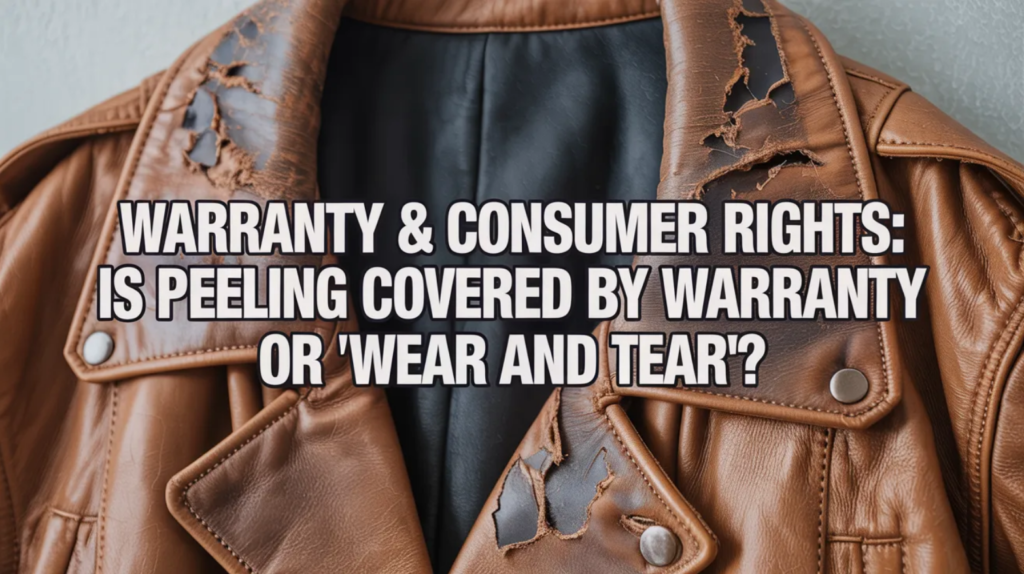
Peeling feels like a “defect,” so it’s frustrating when a brand calls it “wear and tear.” The truth is that coverage depends on timing, the material type, and whether the peeling looks like a manufacturing failure or a surface breakdown caused by friction, heat, cleaning, or age. This guide shows you how to position your claim, what evidence matters, and when it’s smarter to stop arguing and move on to restoration.
Think of peeling as a classification problem, not an emotion problem
Most warranty conversations go wrong because the customer argues from disappointment, while the brand argues from categories.
A brand usually places peeling into one of two boxes:
- Manufacturing / materials defect (something was wrong from the start)
- Wear and tear / misuse / maintenance issue (something broke down over time)
Your goal is not to “win with passion.” Your goal is to make the peeling look like the first box using clear, simple facts.
The fastest way to predict the outcome: timing + pattern
Timing: when did it start?
Peeling that appears very early with normal use is easier to frame as a defect. Peeling that appears after long-term wear is easier for a brand to label as wear and tear.
You don’t need legal language to use timing well. You just need a clean timeline:
- purchase date
- first signs date
- how many wears (roughly)
- where it started (cuffs, collar, sleeve crease, panel)
Pattern: where is it happening?
Brands often treat peeling in high-friction areas as “normal use.” That doesn’t mean you should give up, it means you need better framing.
These patterns are easier to argue as defects:
- peeling happening in a low-friction area (like a back panel) early on
- peeling that looks like a coating lifting in sheets rather than gradual rubbing
- multiple owners reporting the same problem on the same model (if you can show it)
These patterns are easier for brands to label wear and tear:
- peeling mostly on cuffs, collar edges, pocket corners
- peeling that follows crease lines from normal movement
- peeling after exposure to heat, humidity, heavy rain, or harsh cleaners
Know what you’re actually dealing with: leather vs coated surfaces
This one changes everything.
Some jackets marketed as “leather” use coated finishes heavily, and some “leather-look” materials peel because the base layer degrades with age. A warranty reviewer may not explain this, but their decision often reflects it.
If the peeled area reveals something fabric-like or plasticky, the brand may argue material limitation or misuse. If the underlying leather looks normal and only the top finish is lifting, you can frame it as finish failure, especially if it happened quickly.
What brands look for when deciding “wear and tear”
Even when a warranty exists, many policies exclude “normal wear,” and brands interpret that phrase broadly.
They often look at:
- wear frequency (daily use vs occasional)
- exposure (rain, heat, storage, sunlight)
- cleaning history (wipes, alcohol cleaners, strong soaps)
- third-party repairs (DIY kits or outside repairs can void coverage)
This is why a warranty claim can get weaker if you already tried patching it. If you’re considering a kit, it helps to decide first, because a jacket can look “fixed” briefly but fail again after flexing and wear, and the brand may then blame the repair attempt instead of the original finish.
Evidence that actually helps (and how to collect it in 10 minutes)
Most people send one blurry photo and hope for the best. Do this instead:
- Natural daylight photos
Front, back, sleeves, collar, and close-ups of the peeling edge. - A short written timeline
Keep it factual, not emotional: “Purchased on ___, worn about ___ times, peeling noticed on ___.” - A no-misuse statement
One sentence: “No harsh cleaners, no alcohol wipes, no heat drying.” - If possible, an early photo
A picture of you wearing it earlier can help show condition and age. - One clear request
Repair, replacement, or partial credit, ask for one, not five.
The wording that gets better responses (without sounding legal)
Avoid: “This is unacceptable.”
Use: “This appeared unusually early with normal use.”
Avoid: “Your product is low quality.”
Use: “The finish is failing in a way that doesn’t match reasonable durability.”
Avoid: “It’s definitely a defect.”
Use: “This looks like a materials/finish issue rather than friction wear.”
You’re guiding the reviewer toward the defect box without forcing them to defend themselves.
When to stop the warranty fight and choose the smartest next move
Sometimes the claim becomes a time sink. If you’ve provided clear evidence and you still get the same “wear and tear” response, you don’t have to stay stuck.
At that point, the practical question becomes: “If I pay for restoration, will the result be worth it for this jacket?”
That’s the moment when people usually regain control by stepping back to the bigger decision hub, because a peeling claim often turns into a repair decision anyway. A jacket becomes easier to evaluate when you weigh professional restoration against replacement using real durability expectations rather than waiting for a perfect warranty outcome.
If you go the paid route, protect yourself from the wrong kind of quote
When peeling is involved, not all quotes mean the same thing. Some shops price a “cosmetic cover,” while others price a rebuild that can flex long-term.
This is why costs rise when a jacket needs surface stabilizing and finish rebuilding instead of simple cleaning and recoloring, and it’s also why a cheap fix can become expensive if it fails and has to be redone.
Conclusion
Peeling can be covered by warranty when it appears unusually early and looks like a finish or materials failure, but brands often label peeling as “wear and tear” when it shows up after extended use or in high-friction areas. The best outcomes come from a calm approach: document timing, show clear photos, describe normal use, and request a reasonable remedy. If the warranty path stalls, shifting to a restoration decision can be the fastest way to get your jacket back to wearable, without spending months in back-and-forth emails.