An expensive leather jacket can start peeling and instantly feel “ruined,” but peeling doesn’t always mean the jacket is finished. The real decision comes down to three things: what material is actually failing, how widespread the peeling is, and whether professional repair will hold up in the way you need. This checklist helps you decide calmly, without paying for hope.
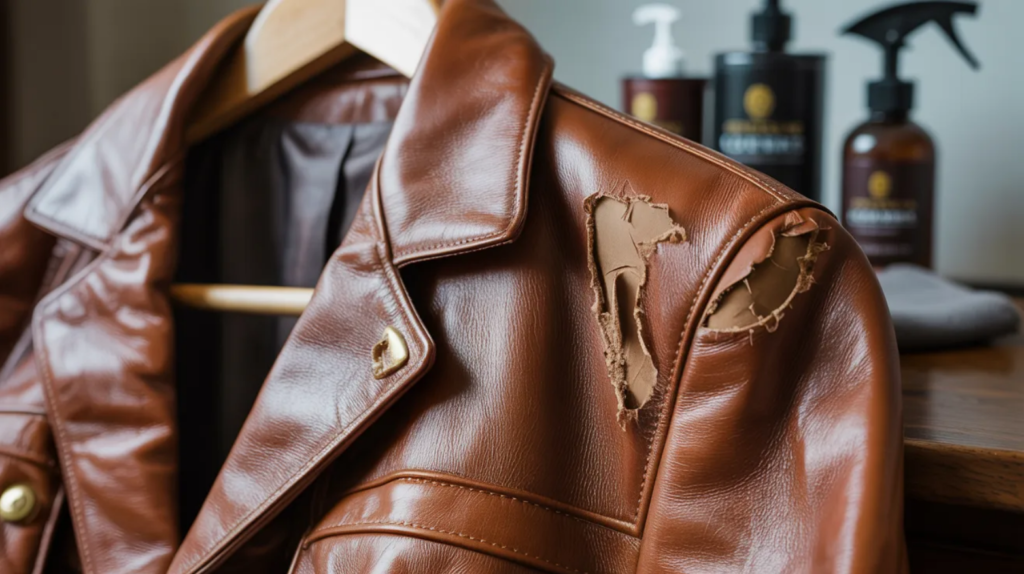
Step 1: Confirm what’s peeling
Before you decide, identify what is breaking down, because the repair path changes completely depending on the surface type.
Most peeling is one of these:
- A failing top coating (finish breakdown): the surface flakes, looks patchy, or rubs off in layers
- A coated material problem: some “leather-look” or heavily coated jackets peel because the base layer degrades over time
- Old DIY layers failing: paint, sealers, or repair products can crack and peel after the jacket flexes
Quick self-check (no tools needed):
- If the jacket looks normal underneath the peeled area but the top layer is flaking, it’s usually a finish/coating failure.
- If the peeled area exposes a fabric-like layer or looks plasticky and brittle, the base material may be degrading.
If you’re unsure, treat it like a “surface stability” question, because unstable surfaces drive both cost and outcome.
Step 2: Rate the peeling spread
Peeling repairs are most successful when the problem is limited and predictable.
Choose the description that matches your jacket:
A) Localised peeling (best repair candidate)
- Peeling is limited to cuffs, collar edges, pocket corners, or a small patch.
- The rest of the jacket still looks stable and wearable.
Usually worth repairing when the jacket is truly expensive, fits well, and you’ll keep wearing it.
B) Medium spread (repair may be worth it, but shop choice matters)
- Peeling appears in multiple friction zones (cuffs + collar + elbows).
- Some panels look stable, but you can see the problem “creeping.”
Often worth repairing if the jacket is high-quality and the specialist explains how they stabilize and reseal the finish.
C) Widespread peeling (highest risk zone)
- Peeling covers large panels (front, back, sleeves).
- New peeling appears every few weeks.
Often not worth repairing unless the jacket has strong sentimental value or the specialist confirms the base is stable enough to rebuild.
Step 3: Check the jacket’s “core value” score
Peeling feels dramatic, but the smart question is: “If the finish was fixed, would this jacket still be a jacket I love?”
Give yourself 1 point for each “yes”:
- Fit: It fits perfectly and replacement is hard
- Comfort: You still love how it feels when worn
- Quality: Construction is strong (stitching, lining, panels, hardware)
- Style: You’d keep wearing it for years if it looked good again
- Value: Replacement cost would be painful or disappointing
Score guide:
- 4-5 points: restoration is usually worth serious consideration
- 2-3 points: depends on peeling spread + quote realism
- 0-1 point: replacement is often the smarter move
Step 4: Spot the “repairable vs money trap” signs
Signs it’s probably repairable
- Peeling is mostly on edges or friction zones
- Leather panels feel flexible, not crunchy or brittle
- The jacket doesn’t show deep cracking through the material
- The surface looks stable outside the peeling areas
Signs it may be a money trap
- Peeling is everywhere across multiple panels
- The material feels brittle or plasticky
- The jacket has repeated DIY layers that keep failing
- New peeling appears quickly even after gentle care
If you’re in the “money trap” zone, even a great repair can become a cycle of touch-ups.
Step 5: Compare the quote to the “outcome you actually need”
A repair can be “good” and still not be the right choice if you need daily wear durability.
Ask yourself:
- Do I need it to look good only for occasional wear, or do I need it to survive weekly use?
- Will I be upset if the repaired area shows faint texture differences in daylight?
- Am I okay with potential maintenance touch-ups later?
This is where price context matters. Many people feel confident once they understand why the quote rises when a jacket needs finish rebuilding rather than simple cleaning and recoloring.
Step 6: Decide using this final 60-second checklist
If you answer YES to most of these, repair is usually worth it:
- The peeling is localized or medium spread
- The jacket scores 4-5 on core value
- The leather panels feel strong and flexible
- You plan to keep wearing it after repair
- You can accept “excellent improvement” rather than “factory-new perfection”
If you answer NO to most of these, replacement is usually smarter:
- Peeling is widespread across panels
- The base material looks like it’s degrading
- You wouldn’t wear it much even if repaired
- The quote is near the cost of a replacement you’d prefer
Step 7: Reduce your risk before you commit
This is the step that saves people the most money: choosing the right specialist.
Widespread peeling is where overpromising happens, because “it can be fixed” is not the same as “it will hold up.”
That’s why many people avoid expensive regret when they ask the right questions before trusting a local specialist, especially about prep steps, sealing, and realistic durability.
Conclusion
A peeling expensive leather jacket is worth repairing when the underlying panels are strong, the peeling is limited or manageable, and the repair outcome matches how you plan to wear it. Professional restoration can bring back the look and confidence of wearing a jacket you love, but only when the surface is stable enough to rebuild and seal properly.
If you want the full decision hub that ties together cost, repair options, and what to expect from professional work, most people reach clarity once they understand how professional leather jacket restoration fits into the bigger “repair vs replace” decision.