Topcoat separation is one of the most frustrating types of “leather peeling” because it often looks sudden. One week the jacket looks fine, and the next week a thin, clear layer starts lifting, usually at a crease or edge, then keeps spreading every time the jacket flexes.
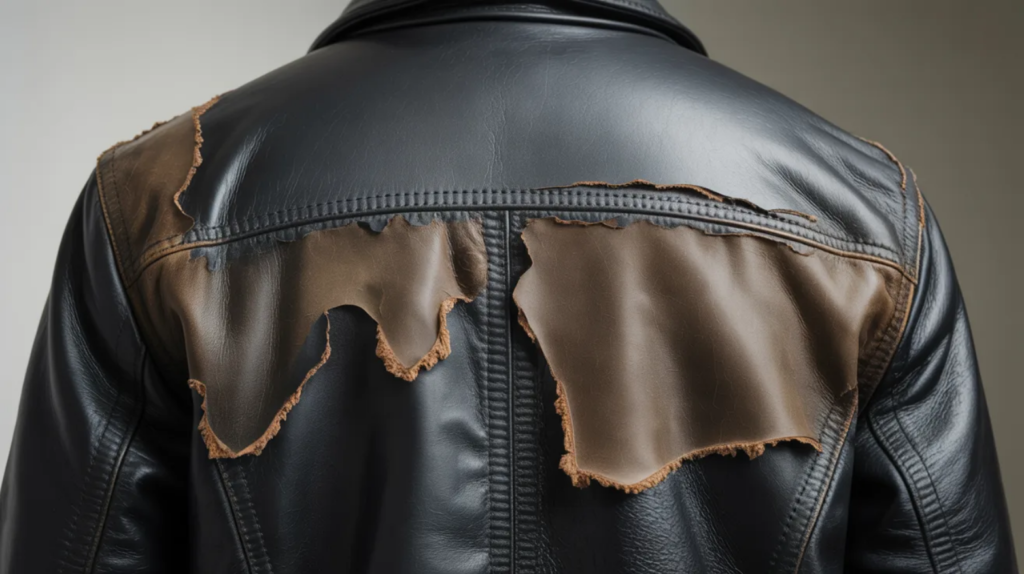
The key reality is simple: the clear protective layer is no longer bonded firmly to the layer beneath it. Once that bond weakens, movement does the rest.
What the “topcoat” really is
Most finished leather jackets have a surface system that includes a color layer and a clear protective layer on top. That clear layer is commonly called the topcoat. It controls:
- shine (matte, satin, glossy)
- scuff resistance
- light water resistance
- that smooth “sealed” feel
Because this layer sits at the surface, it takes the most daily stress. When you understand where it sits in the finish stack, topcoat separation becomes easier to diagnose, which is why the overview in leather finish layers helps you interpret what you’re seeing on your jacket.
What topcoat separation looks like in real life
Topcoat separation has a very specific look and feel:
- The peeling often appears thin and film-like, not dusty.
- The lifted piece can look translucent, like a clear skin.
- The peel edge can be smooth and clean, not crumbly.
- The area underneath may look duller or a different sheen.
- The peeling usually spreads from flex points (elbows, shoulders, collar bends).
If you rub the area lightly and the film edge catches, it tends to lift further because the jacket keeps moving in that same place.
Why topcoat separation happens
Topcoat separation happens when a clear film loses grip. That loss of grip usually comes from one of four stress categories: movement stress, abrasion, environmental breakdown, or chemical interference.
1) Repeated flexing breaks the bond at crease lines
Every leather jacket forms “movement highways” where it bends over and over. Those bends create micro-stress at the bond line between the topcoat and the color layer below.
At first, the stress is invisible. Then you see fine crack lines. Then a tiny edge lifts. Once that edge exists, flexing pulls at it every time you wear the jacket.
This is why topcoat peeling tends to start at elbows, underarms, and collar folds rather than on flat panels.
2) Abrasion slowly weakens the topcoat until it lifts
Topcoat doesn’t always fail by cracking first. Sometimes it fails by wearing thin.
A seat belt, backpack strap, desk edge, or even frequent pocket contact can gradually scuff the topcoat. As it thins, it loses cohesion and becomes easier to lift, especially when the jacket bends.
The pattern often looks like:
- dulling → micro-scratches → thin patch → lifted edge → peeling film
If one shoulder peels faster than the other, abrasion is often the silent cause.
3) Heat and sun change the film’s flexibility
A clear protective film needs flexibility. Heat and sun exposure can change that flexibility over time, making the film either too dry and brittle or unevenly stressed across a panel.
That uneven stress shows up as fine cracking first, then a lifted edge at a crease. This is why jackets that spend time in hot cars, near heaters, or in harsh sunlight can start breaking down after repeated heat and sun exposure, even if the owner didn’t “do anything wrong.”
4) Humidity and sweat weaken the bond in problem areas
Humidity and sweat don’t always cause dramatic damage quickly, but they can weaken the finish system gradually.
Sweat introduces salts and oils, which can sit in flex points like underarms and collar edges. Moisture cycles also expand and contract the film slightly. Over time, that repeated moisture stress can reduce adhesion and encourage lifting.
5) Cleaning products strip or soften the topcoat
Many topcoat separations start after a cleaning attempt.
Alcohol-heavy wipes, strong degreasers, acetone-like removers, and harsh detergents can soften or partially strip a clear film. That film may look okay immediately after cleaning, then later becomes brittle and starts lifting at the next crease.
A common clue is a peel that starts soon after:
- wiping with disinfectant wipes
- removing a stain with strong cleaner
- aggressive scrubbing on one area
The cleaner changes the film, and movement exposes the weakness.
6) Waxy conditioners and silicone sprays create “slip layers”
Not all leather products are compatible with all finishes. Some sprays and polishes leave residues that feel slick. Slickness can be pleasant to the touch, but it can also interfere with bonding if anything is applied over it later.
If a jacket is treated with a waxy product and then later gets a touch-up coat or paint, the new layer may sit on top rather than bonding. That creates a weak boundary that lifts easily.
When peeling appears around older touch-ups, it often points to surface layer bond weakening rather than a purely “dry leather” problem.
7) Manufacturing weak adhesion from the start
Sometimes topcoat separation happens because the original finish system wasn’t bonded well. In those cases, peeling can appear earlier than expected and may happen in more than one area.
The peeling edge often looks clean and film-like, and it can lift in larger sheets because the bond line was weak from day one.
Topcoat separation vs surface flaking: a simple difference
Topcoat separation usually looks like a clear film lifting.
Surface flaking usually looks like colour shedding or powdery, dry flakes.
That difference matters because it changes what you should do next. If you’re still unsure, comparing your jacket’s behavior to delamination vs surface flaking can help, especially if the jacket might be PU or bonded rather than traditional leather.
The most common places topcoat separation begins
Topcoat separation almost always begins where stress is concentrated:
- elbow creases
- shoulder tops (especially under straps)
- collar folds
- cuff edges
- zipper line folds
These zones combine flexing and friction, so the bond line has to work hardest there.
What you should avoid if your topcoat is lifting
When the topcoat is already lifting, certain actions make it spread faster:
- picking at the edge (it grows like a tear in fabric)
- aggressive rubbing or scrubbing
- strong solvents or alcohol wipes
- applying thick conditioners over a peeling film
- coating over residue without proper prep
At this stage, gentle handling matters because every flex can tug on the lifted edge.
Conclusion
Topcoat separation happens when the clear protective layer on a leather jacket loses adhesion to the layer beneath it. That loss of adhesion usually comes from repeated flexing in crease lines, abrasion in friction zones, heat and sun stress that changes film flexibility, chemical cleaning that weakens the coating, or residue that creates a weak boundary between layers.
Once you recognize the film-like peel and understand where the topcoat sits in the finish layer system, the cause becomes easier to identify, and you can make smarter decisions before the peeling spreads across the jacket.