When a jacket starts peeling, it feels like the material is “giving up” in your hands. The good news is that peeling usually follows a pattern, and once you understand that pattern, you can slow it down, stabilize the surface, and prevent new areas from flaking.
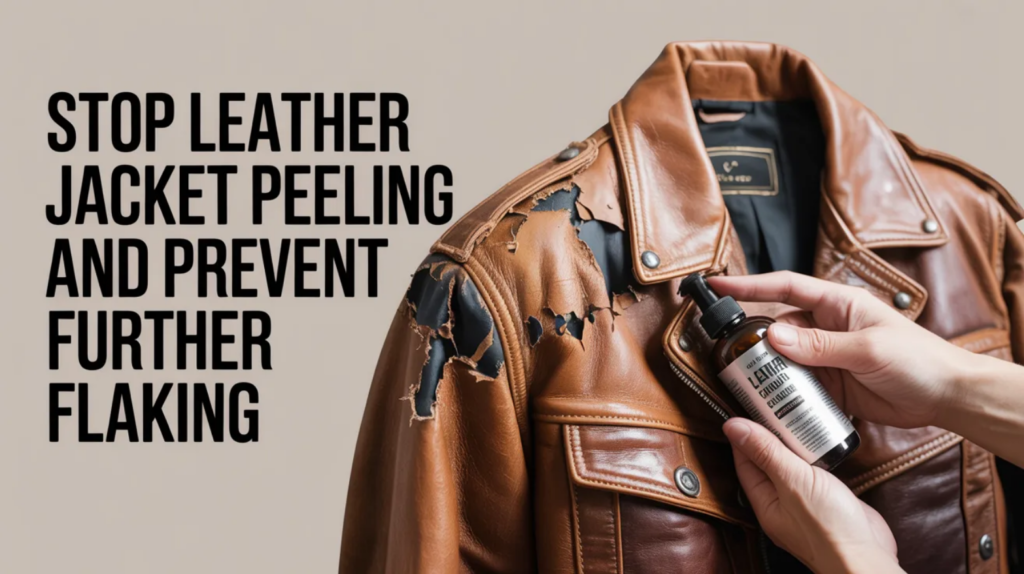
This guide is your “do it now + prevent it later” hub. It explains what peeling really is, why it happens, what to avoid immediately, and how to build a routine that keeps the finish stable through daily wear, weather changes, and storage.
What peeling actually is
Peeling happens when a surface layer separates from what’s underneath. On many jackets, that surface layer is a protective topcoat, and once it starts lifting, it breaks away in thin flakes.
That’s why peeling looks different from normal leather aging. Real leather usually shows dryness, scuffs, or cracking first, while coated materials often lose a film-like layer that comes off in sheets or chips.
The fastest way to stop peeling is to stop feeding it
Peeling spreads when the loose edge keeps catching. Your sleeve rubs a table, your shoulder drags on a car seat, the cuff bends repeatedly, and each movement pulls the weak finish a little farther.
So the first win is simple: remove the triggers that keep tugging at the damaged surface.
- Friction makes flakes lift faster because the edge keeps snagging.
- Heat speeds surface breakdown because it dries and stresses the top layer.
- Humidity swings weaken the bond between layers because materials expand and contract, which is why a leather jacket can start peeling when exposed to heat or humidity fluctuations.
- Harsh cleaning strips what little protection is left, leaving the finish even more fragile.
If you do nothing else today, reduce rubbing and stop using strong cleaners on the peeling area.
Identify what you’re dealing with before you apply anything
The right fix depends on what the jacket’s surface is made of. Many people discover this only after a well-meaning “conditioner” makes the peeling look worse.
Signs you may have a coated or bonded material
Peeling often reveals a fabric-like or paper-like backing. The flakes may look like paint chips, and the exposed area can appear smooth, flat, or synthetic.
Signs you may have genuine leather with a failing finish
The surface usually has natural grain variation. The damage may start as dryness and cracking, then progresses into flaking as the finish breaks down.
Either way, the next step is not “repair” yet. The next step is stabilization.
What to do immediately when peeling begins
Peeling gets worse when the loose edge is pulled. Your job is to prevent tugging and keep the surface from turning into a wider patch.
Stop pulling flakes, even if they feel loose
Pulling doesn’t remove only the damaged piece. It often lifts the surrounding finish too, and that creates a larger peeling border.
Reduce bending pressure in the worst areas
Elbows, cuffs, and shoulders are peeling hotspots because they flex constantly. Limiting hard bends gives the weakened finish a chance to stay intact instead of cracking outward.
Keep the surface clean without stripping it
Dust and grit act like sandpaper. A gentle wipe removes abrasion without dissolving what remains of the finish.
Apply the “right type” of protection, not the “most popular” one
Some products soften and nourish. Others create a barrier film. The choice matters because a nourishing conditioner behaves differently than a surface coating, and using the wrong type can highlight flakes, trap rough edges, or leave a patchy shine. That’s why many people compare conditioning versus protective coating before they apply anything to a peeling jacket.
Use a controlled first-response routine
Stabilization works best when the steps happen in the right order. A jacket that’s still shedding needs a calm “first day” plan that reduces friction, prevents over-cleaning, and limits further lifting, which is exactly what the first 24 hours checklist is designed to do.
Notice how that last link sits inside the logic of the sentence instead of sounding like a “go here” instruction.
Why peeling keeps coming back without a routine
A peeling jacket is rarely “fixed” by a single product because the cause is usually repeated stress, not a one-time accident. When the surface keeps drying, rubbing, and overheating, the finish keeps losing its grip.
A routine prevents that cycle by doing three things consistently:
- Keeps the surface clean enough to reduce abrasion
- Keeps the material flexible enough to resist cracking
- Keeps the top layer protected enough to avoid early breakdown
That’s the reason a jacket that looks “fine” in the closet can start flaking again after a few weeks of wear, especially when it hasn’t had a stable care rhythm. Many owners prevent repeat peeling by building a simple daily and weekly care routine that focuses on flexibility, low-friction handling, and gentle protection.
Heat and humidity are silent accelerators
Even if you never scrub your jacket, climate alone can weaken the surface over time.
Heat dries out surface oils and stresses coatings. Humidity increases swelling and softening, then shrinkage as the air dries again. That repeated expansion and contraction is what makes finishes lift at the edges, especially near seams and high-movement zones.
If you’ve ever noticed peeling gets worse after a hot car ride, a humid day, or a heater-heavy room, that pattern is not in your head. It’s a predictable reaction of layered surfaces, and the practical fixes are covered in the guide on humidity and heat finish degradation.
Storage is where many jackets lose the battle
A jacket can look stable at the end of winter, then peel the next season because storage quietly set it up for failure.
- A tight wardrobe creates friction and constant rubbing at the shoulders.
- A plastic cover traps moisture, which encourages softening and breakdown.
- A dry heater-driven room removes flexibility, which encourages cracking and flaking once the jacket bends again.
Seasonal shifts also matter. Cold, dry months encourage brittleness. Warm, humid months encourage separation and surface weakening. That’s why preventing flaking during downtime often comes down to winter storage and seasonal care that protects shape, airflow, and surface stability.
What “prevention” really looks like in real life
Prevention is not about babying the jacket forever. It’s about keeping the surface stable enough that normal wear doesn’t turn into surface failure.
A jacket stays healthier when:
- it’s handled gently at peeling hotspots (elbows/cuffs/shoulders)
- it’s kept away from steady heat sources
- also, it’s protected from wild humidity swings
- it gets light, consistent care rather than rare “intense” treatment
- it’s stored properly so it doesn’t dry out or suffocate
When those conditions stay consistent, peeling slows dramatically, and small flakes stop turning into large patches.
Final reality check
Leather jacket peeling is a surface-layer failure. Once the outer finish starts lifting, friction, heat, dryness, and humidity swings can push the damage outward. Stabilizing the jacket early, using the right type of surface protection, and following a consistent care and storage system can prevent further flaking and extend the jacket’s wearable life.