When a leather jacket starts peeling, the product aisle feels like a trap. One bottle promises “restore,” another promises “protect,” and both can make the surface look worse if the jacket’s finish is already lifting. The safest approach is to match the product type to the surface problem you’re actually facing: dryness needs flexibility, while a fragile top layer needs stability.
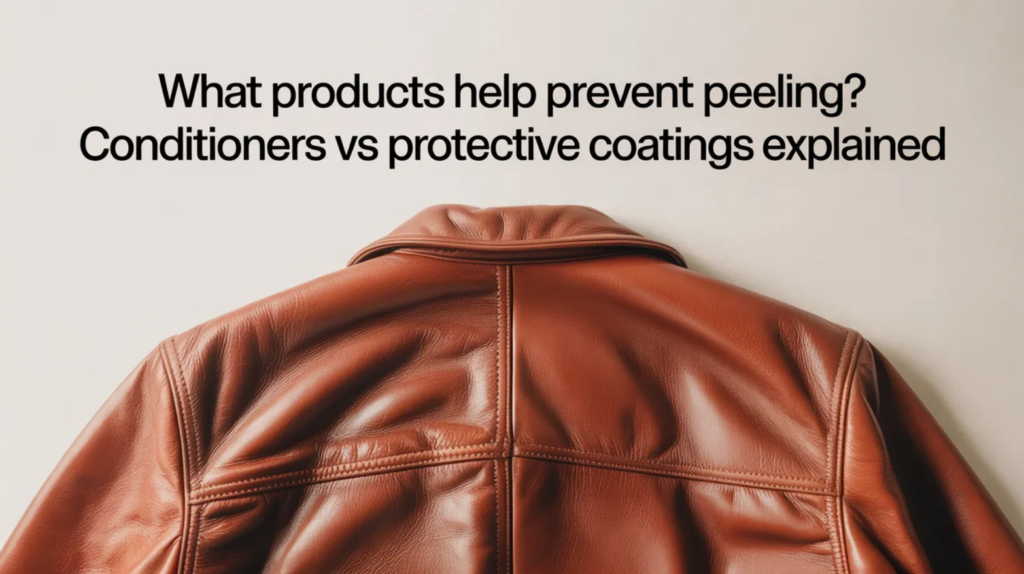
This page breaks down what conditioners do, what protective coatings do, when each one helps, and how to avoid the common mistakes that turn light peeling into a larger patch.
Why product choice matters when a jacket is peeling
Peeling usually means the outer layer is weakening and separating. Once that separation begins, heavy oils can darken or loosen the look of the edge, and thick sealers can lock in texture differences so the patch becomes more noticeable.
That’s why prevention products work best when the peeling is calm and controlled, not when the surface is actively shedding. If the jacket is still flaking easily, the surface stabilizes faster when you treat it like a fragile finish and handle it with the first-day approach where the peeling edge stops getting pulled during normal movement, like in the routine that prevents the surface from spreading in the first 24 hours.
Once the shedding slows, product choice becomes your main lever.
The simple difference in one sentence
- Conditioners improve flexibility by replenishing oils and reducing dryness.
- Protective coatings improve surface stability by adding a barrier layer that reduces abrasion and moisture impact.
Both can help, but they solve different problems.
Conditioners: what they do and when they help most
A leather conditioner makes leather more flexible. Flexibility reduces cracking, and fewer cracks mean fewer weak edges for the finish to lift around.
Conditioners help most when:
- the leather feels tight, stiff, or “papery”
- the surface shows dryness lines before it flakes
- the jacket creases sharply and looks stressed at bends
- peeling is minor and you’re trying to prevent new areas
Conditioners help less when:
- the peeling looks like a film lifting in chips
- you can see fabric-like backing under flakes
- the jacket behaves more like a coated surface than a natural hide
What conditioning should feel like
After conditioning, the leather should feel slightly softer, not oily. A greasy feel attracts dust, increases rubbing, and can make the peeling border look dirtier over time.
That’s why prevention works better with a steady rhythm where the surface stays flexible without building up residue, like the pattern in the daily and weekly care routine.
Protective coatings: what they do and when they help most
A protective coating adds a thin barrier layer over the surface. That barrier reduces abrasion from wear, and it can slow the finish breakdown that happens when the jacket keeps experiencing rubbing and environmental swings.
Protective coatings help most when:
- the jacket’s surface acts like a top layer that keeps lifting
- the peeling is triggered by rubbing points (elbows, cuffs, shoulders)
- the finish looks fragile even when the leather underneath feels fine
- weather exposure seems to accelerate damage, especially when heat and humidity swings stress the surface
Protective coatings help less when:
- the leather is dry and needs flexibility first
- the surface already looks patchy and uneven in sheen
- the jacket is peeling heavily and texture differences are obvious
What protection should feel like
After a proper protective layer, the surface should feel smoother and more resistant to scuffing, not thick or plasticky. Thick layers often crack later and can make peeling more dramatic.
A quick decision check you can do at home
If the jacket feels dry and tight…
Conditioning usually comes first because flexibility reduces future cracking.
If the jacket feels like a fragile film is lifting…
Surface protection usually matters more because friction keeps grabbing the edge.
If both are true…
Start with light conditioning to restore flexibility, then add protection only after the surface looks calm and stable.
That “calm first, protect second” order prevents the common mistake of sealing a surface that is still unstable.
Conditioner vs protective coating at a glance
| Your jacket situation | What usually helps more | Why it works |
|---|---|---|
| Leather feels stiff, dry, or tight | Conditioner | Flexibility reduces cracking and stress at bends |
| Peeling is triggered by rubbing points | Protective coating | Barrier reduces abrasion that lifts edges |
| Finish looks fragile but leather feels okay | Protective coating | Stabilizes the surface layer so it doesn’t lift as fast |
| Minor peeling + dryness together | Conditioner first, then protection if needed | Flexibility first, stability second |
| Jacket is stored for long periods | Light conditioning + smart storage | Prevents drying and surface stress during downtime |
Storage matters here because even perfect products struggle when a jacket sits in bad conditions; that’s why flaking often returns after weather changes when seasonal storage stresses the finish.
The most common product mistakes that make peeling worse
Using too much product too fast
More product doesn’t mean more protection. Heavy application increases residue, attracts dust, and makes rubbing worse.
Rubbing hard to “work it in”
Hard rubbing lifts weak edges. Gentle strokes keep the peeling border from being pulled.
Sealing an unstable surface
When the surface is still shedding, sealing can lock in rough texture differences and make the patch stand out. Stabilizing first prevents that.
Mixing many products in the same day
Layering unknown formulas can create tackiness, dullness, or uneven shine. A simple approach is easier to control.
A safe product approach that fits most peeling situations
Step 1: Make the surface calm
When the jacket is still flaking easily, the biggest improvement often comes from reducing friction and stabilizing the environment so the edge stops getting tugged, especially during the first day when spread is easiest to prevent, like in the initial stabilization steps.
Step 2: Restore flexibility if the leather is dry
A thin conditioning layer helps the jacket bend without stressing the surface.
Step 3: Add protection only when the surface looks stable
A thin protective layer helps prevent future lifting at high-rub zones.
Step 4: Maintain with a routine instead of “big treatments”
Peeling prevention works best when care is small and consistent, which is why the weekly rhythm tends to outperform occasional heavy applications.
What to expect after you choose the right product type
The best sign you chose correctly is not instant perfection. It’s slower spreading.
Over time you should notice:
- fewer new peeling spots
- less edge lifting at the same hotspots
- the surface staying calmer during normal wear
- fewer sudden flare-ups after weather changes
When the jacket stays in stable conditions, especially when heat and humidity shifts are controlled, those improvements tend to compound.