Peeling often feels random until you notice a pattern: it gets worse after a hot day, a steamy room, a heater-heavy winter week, or even a humid closet. That’s not bad luck. Heat and humidity change how the jacket’s surface behaves, and repeated swings can weaken the finish until it starts lifting.
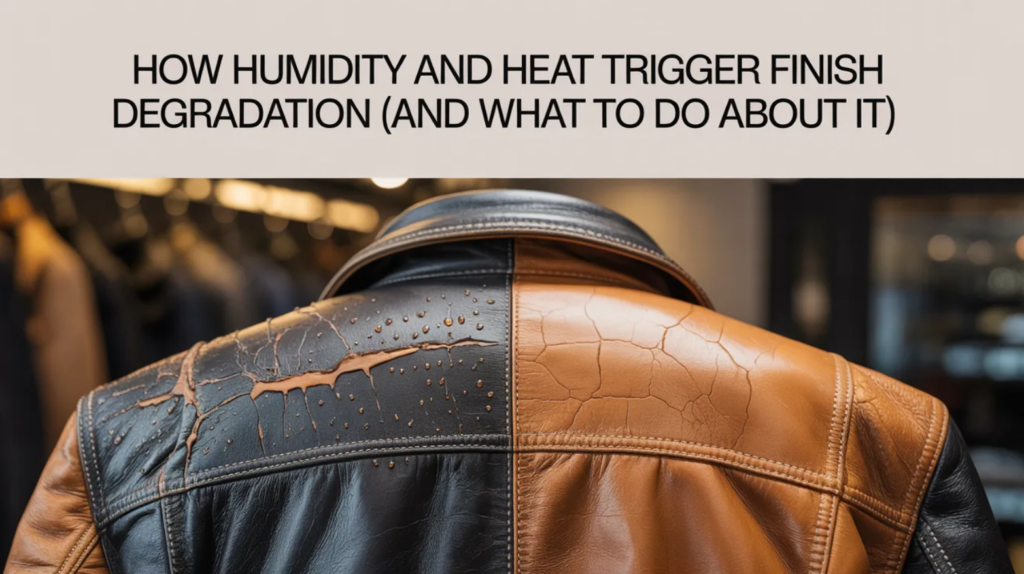
This page explains what’s happening and how to set up simple “climate habits” that keep the surface stable.
Why heat and humidity matter more than most people realize
A jacket’s surface is not static. It responds to the environment.
- Heat pulls moisture from the surface and speeds drying.
- Humidity adds moisture and softens the top layer.
- Rapid changes force the surface to expand and contract repeatedly.
When a finish is already weak, that repeated stress makes small flakes loosen faster. The peeling edge then catches more easily during normal wear, which is how a small patch grows into a bigger one.
What heat does to a peeling surface
Heat accelerates breakdown in three common ways:
Heat dries and stiffens the surface
As the surface dries, it loses flexibility. A less flexible surface cracks more easily at bends like elbows and cuffs.
Heat increases friction risk
Warm, dry surfaces often feel slightly “grabby,” especially when dust builds up. That raises the chance that a loose edge will snag during movement.
Heat speeds chemical aging
Even without harsh cleaners, repeated warmth can age a top layer faster. That’s why peeling sometimes flares after sitting in a hot car or being stored near a heater.
What humidity does to a peeling surface
Humidity usually causes trouble in a different way:
Humidity softens the finish, then shrinkage stresses it
A humid room can soften the surface layer. When the air dries again, the surface tightens. That cycle can loosen the bond between layers.
Humidity makes closets risky
A jacket can sit quietly for weeks and come out worse because the closet air stayed damp. Softened surfaces also collect dust more easily, which adds friction later.
Humidity can cause sticky or uneven feel
Some finishes become tacky in humidity. Tackiness increases dust pickup, and dust increases abrasion.
The real problem is “swings,” not one bad day
A single warm afternoon rarely destroys a jacket. The bigger issue is repeated up-and-down stress:
- hot outdoors → cool air-conditioning
- cold dry winter air → warm heater air
- humid rainy weather → dry indoor air
That constant switching makes the surface work too hard, especially when it already has a weak edge.
If you’re trying to stop the peeling from spreading right now, the fastest gains come from limiting friction and keeping the surface calm, the same principle used in stopping leather jacket peeling and preventing further flaking.
What to do about it: practical climate control that actually works
You don’t need special equipment. You need consistency.
1) Keep the jacket away from direct heat sources
Avoid hanging it near:
- room heaters
- radiators
- kitchen heat and steam
- windows with strong sun
Heat exposure doesn’t have to be extreme to cause problems. Repeated mild heat is enough to dry and stress the finish over time.
2) Let it acclimate instead of shocking it
If the jacket comes from cold outdoor air into a warm room, don’t immediately wear it and flex the sleeves hard. Give it a few minutes to settle so the surface isn’t stressed while it’s rapidly changing.
3) Improve closet airflow
A jacket stored in a cramped, damp closet tends to age faster. Give it space on a wide hanger and avoid plastic covers that trap moisture.
Season changes are when many jackets take damage quietly, which is why winter storage and seasonal care matters even if you think the jacket is “resting safely.”
4) Reduce dust buildup so humidity doesn’t turn it into abrasion
Humidity can make dust cling. Dust then becomes friction when the jacket dries. A gentle maintenance rhythm prevents that cycle, and it’s one reason a steady daily and weekly care routine slows peeling better than occasional heavy treatments.
Quick scenarios and the best response
“It peels more after I drive”
Cars create heat, friction (seat and belt rub), and fast temperature changes. Keep the jacket off the seat back, avoid straps rubbing the same shoulder, and don’t leave it in the car after arriving.
“It peels more in winter”
Indoor heating dries the surface. Avoid heater-adjacent storage and keep care consistent so the surface stays flexible.
“It peels more in monsoon/humid days”
Humidity softens the surface and makes it more vulnerable to rubbing. Focus on airflow, avoid damp closets, and reduce abrasion until conditions stabilize.
What you should notice when climate is under control
You’re not looking for instant perfection. You’re looking for calmer behavior:
- fewer new flakes after wearing
- less edge lifting at elbows and cuffs
- fewer “sudden” flare-ups after weather changes
- the surface feeling more stable week to week
When those changes show up, it usually means the environment stopped doing silent damage in the background.